How To Cook Japanese Rice in a Pot on the Stove (Video)


How To Cook Japanese Rice in a Pot on the Stove (Video)

' data-evernote-id='2489' class='js-evernote-checked'%3e%3cpolygon fill='none' stroke='%23343434' stroke-width='2' stroke-linecap='square' stroke-miterlimit='10' points='12%2c2.6 15%2c9 21.4%2c9 16.7%2c13.9 18.6%2c21.4 12%2c17.6 5.4%2c21.4 7.3%2c13.9 2.6%2c9 9%2c9 ' stroke-linejoin='miter' data-evernote-id='2490' class='js-evernote-checked'%3e%3c/polygon%3e%3c/g%3e%3c/svg%3e)
' data-evernote-id='2493' class='js-evernote-checked'%3e%3cpolygon fill='none' stroke='%23343434' stroke-width='2' stroke-linecap='square' stroke-miterlimit='10' points='12%2c2.6 15%2c9 21.4%2c9 16.7%2c13.9 18.6%2c21.4 12%2c17.6 5.4%2c21.4 7.3%2c13.9 2.6%2c9 9%2c9 ' stroke-linejoin='miter' data-evernote-id='2494' class='js-evernote-checked'%3e%3c/polygon%3e%3c/g%3e%3c/svg%3e)
' data-evernote-id='2497' class='js-evernote-checked'%3e%3cpolygon fill='none' stroke='%23343434' stroke-width='2' stroke-linecap='square' stroke-miterlimit='10' points='12%2c2.6 15%2c9 21.4%2c9 16.7%2c13.9 18.6%2c21.4 12%2c17.6 5.4%2c21.4 7.3%2c13.9 2.6%2c9 9%2c9 ' stroke-linejoin='miter' data-evernote-id='2498' class='js-evernote-checked'%3e%3c/polygon%3e%3c/g%3e%3c/svg%3e)
' data-evernote-id='2501' class='js-evernote-checked'%3e%3cpolygon fill='none' stroke='%23343434' stroke-width='2' stroke-linecap='square' stroke-miterlimit='10' points='12%2c2.6 15%2c9 21.4%2c9 16.7%2c13.9 18.6%2c21.4 12%2c17.6 5.4%2c21.4 7.3%2c13.9 2.6%2c9 9%2c9 ' stroke-linejoin='miter' data-evernote-id='2502' class='js-evernote-checked'%3e%3c/polygon%3e%3c/g%3e%3c/svg%3e)
' data-evernote-id='2505' class='js-evernote-checked'%3e%3cpolygon fill='none' stroke='%23343434' stroke-width='2' stroke-linecap='square' stroke-miterlimit='10' points='12%2c2.6 15%2c9 21.4%2c9 16.7%2c13.9 18.6%2c21.4 12%2c17.6 5.4%2c21.4 7.3%2c13.9 2.6%2c9 9%2c9 ' stroke-linejoin='miter' data-evernote-id='2506' class='js-evernote-checked'%3e%3c/polygon%3e%3c/g%3e%3c/svg%3e)


No rice cooker? Learn how to cook Japanese rice in a pot on the stove! My simple tips and tricks will ensure your rice comes out perfectly every time.
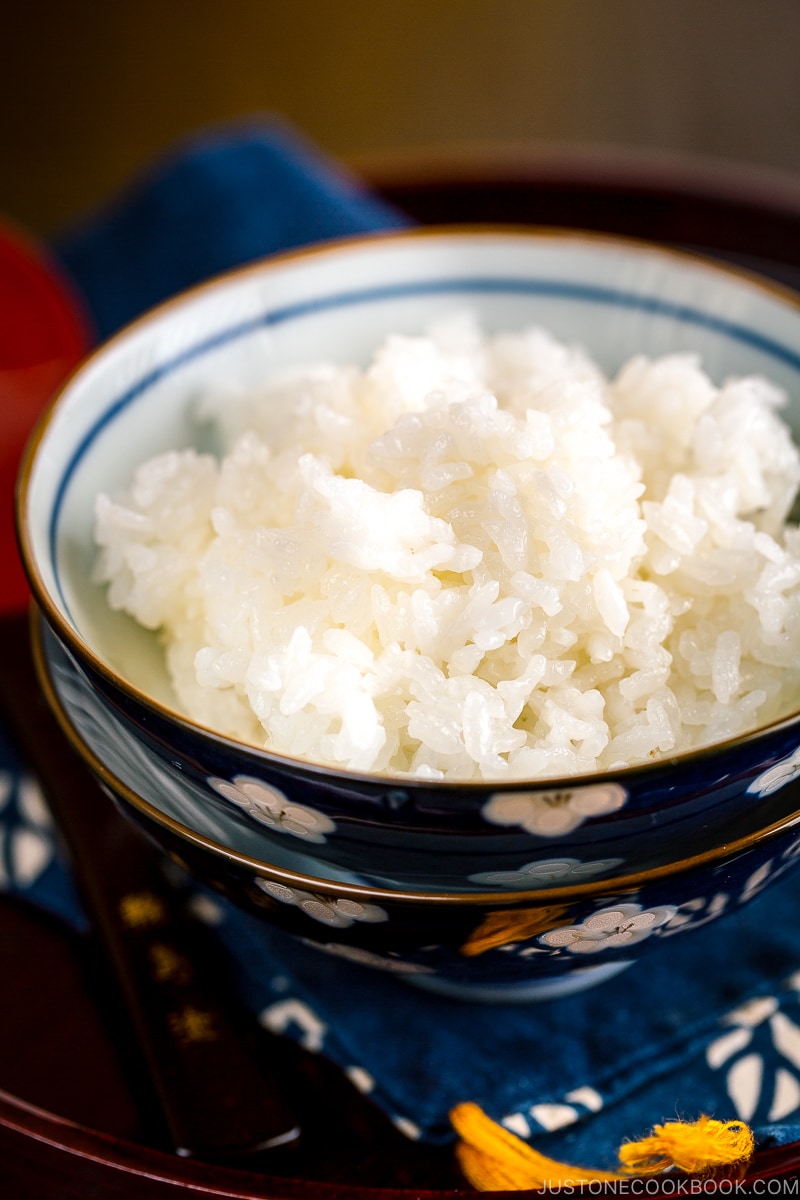
Do you use a rice cooker to make rice or do you cook rice the traditional way in a pot? In this post, let’s get back to basics and I’m going to show you how to cook Japanese rice in a pot on the stove.
MY OTHER RECIPES
MY OTHER RECIPES
Table of contents
Growing up in Japan, where rice is a staple food and the primary source of protein, cooking rice is not only just a basic kitchen task but an extremely important one. While an electric rice cooker with all the bells and whistles seems to be an essential kitchen gadget in most Asian kitchens, I know not everyone eats rice on a daily basis and may not own a rice cooker. It’s also handy to know how to make rice over the stove in case your rice cooker breaks out of the blue or you’re craving rice while camping.
What Type of Rice to Use for Cooking Japanese Food
Japanese rice is a type of Japonica short-grain rice that is short, plump, and rounded oval. It’s worth noting that outside of Japan, Japanese rice is often labeled as ‘sushi rice’ for marketing purposes. However, rice is used not just for making sushi, but also for everyday Japanese dishes.
What makes Japanese rice different from long-grain rice such as basmati or jasmine rice is its high water content, which means the texture is more tender and moist. The grains contain less amylose—a type of starch that separates rice grains— than the long grains, which gives it a more sticky chewy texture.
When cooked properly, the rice grains cling to each other without being mushy, allowing you to pick up the rice easily with chopsticks. You would also notice a beautiful glossy sheen on the surface of the rice. These unique characteristics of Japanese short-grain rice are important because they allow us to make dishes like onigiri and sushi that need to stay in one piece.
Sometimes I hear people calling Japanese rice “sticky rice” due to its sticky texture, but please know that ‘sticky rice’ is technically a different type of rice known as Japanese sweet rice (or glutinous rice) used for making mochi (rice cakes).
To brush up your knowledge, I highly recommend reading “Everything You Need to Know about Japanese Rice” and “Types of Japanese Rice“.
My Favorite Japanese Rice Brands
When it comes to high-quality Japanese rice, I would recommend the Koshihikari variety which is available in various brands at Japanese grocery stores. Known for its sweet taste and fragrance, it is the most popular variety in Japan.
For US-grown koshihikari rice, look for Shirakiku Rice, Tamaki Gold, and Tamanishiki Super Premium Short Grain Rice. For brown rice, we enjoy Genmai Sukoyaka Brown Rice and Koshihikari Premium Sprouted Brown Gaba Rice.
There are also other new cultivars such as Hitomebore, Akitakomachi, Tamanishiki, Tsuyahime, and so on. Each of them has unique characteristics that are different from Koshihikari.
Various Methods for Cooking Japanese Rice
There are different methods to cook Japanese rice at home. Each method has its own advantages and Japanese households often own a few cooking pots/gadgets for different occasions and needs.
- How to Cook Japanese Rice in a Rice Cooker
- How to Make Japanese Rice in an Instant Pot
- How to Cook Japanese Rice in a Donabe (Earthenware pot)
- Instant Pot Brown Rice
The Rice-to-Water Ratio for Short-Grain Rice
It’s very important to remember:
The Japanese golden rule for rice to water ratio [volume] is 1 : 1.1 (or 1.2).
That is 10-20% more water than 1:1 ratio.
For 1 rice cooker cup (180 ml) of uncooked short-grain rice, you will need 200 ml of water.
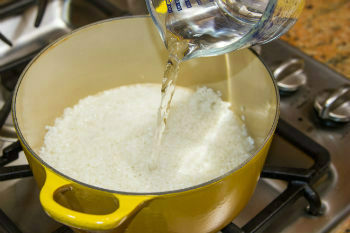
For a US measuring cup (240 ml), however, I use 1:1.25 ratio so that you can measure water using a US cup. So, for 1 US cup of uncooked short-grain rice, you will need 1¼ cups of water.
If you still want to use the golden rule of 1:1.1 ratio, for 1 US cup (240 ml) of uncooked short-grain rice, you will need 264 ml of water.
5 Important Tips When Cooking Japanese Rice
Here are 5 main tips to cook a perfect pot of glossy and tender Japanese rice:
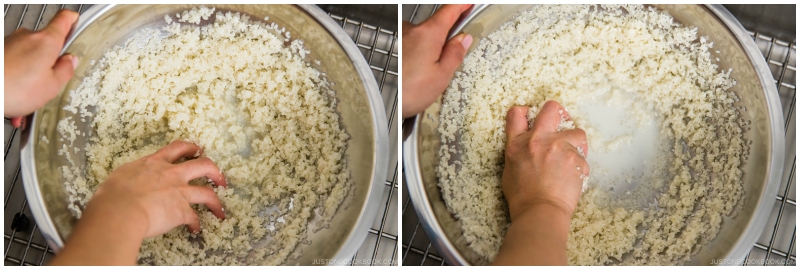
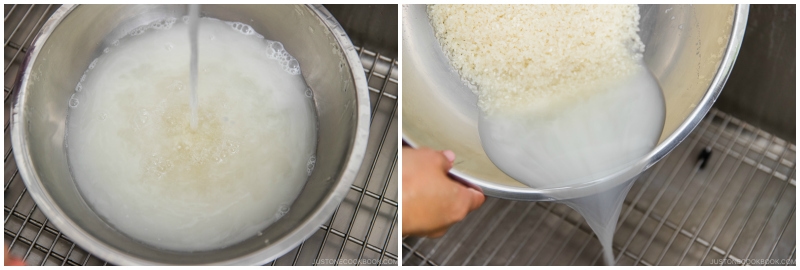
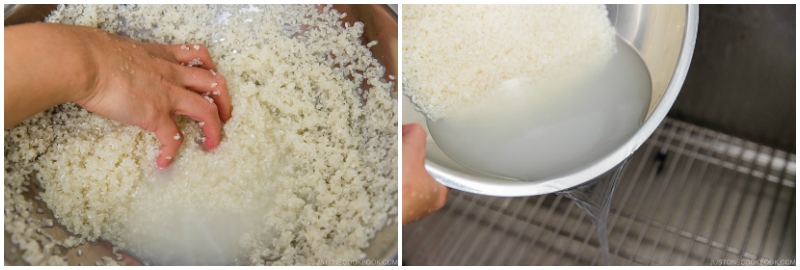
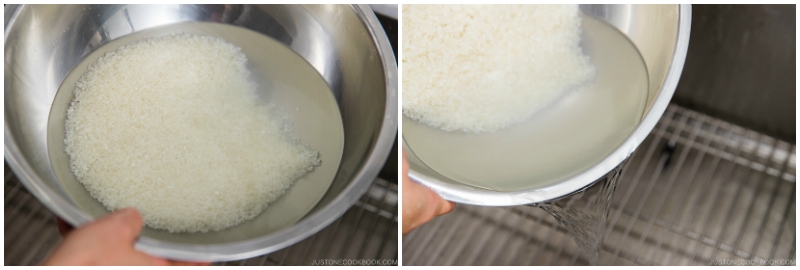
- Wash and rinse the rice. We always start by quickly rinsing and washing the rice a few times to help remove the natural occurrence of arsenic and impurities.
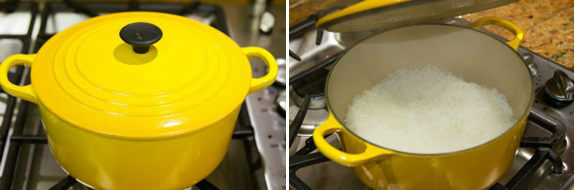
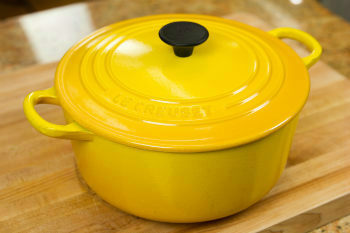
- Use a heavy-bottom pot with a tight-fitting lid that keeps the steam in. If your lid fits loosely, put a clean kitchen cloth between the lid and the pot.
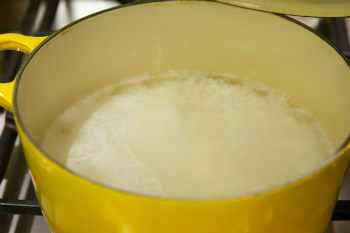
- Always soak the rice in water for 30 minutes. Rice has been sitting in the bag dried after milling, hence it needs moisture to revive the texture. It’s important that you give it enough time for rice to absorb water so that rice has a perfect texture after it’s cooked.
- DO NOT open the lid while cooking! That is a big no-no when it comes to cooking Japanese rice. I learned from my experience to catch the indication of “boiling” by sound. However, until you do, it’s okay to “quickly peek” inside to see if it’s boiling.
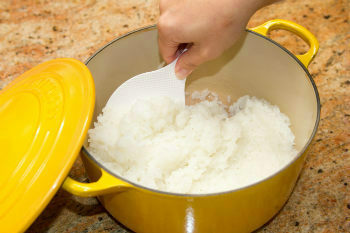
- Rest and fluff. Once the rice is cooked, let it rest for 10 minutes to steam fully and then fluff to help evaporate the excess moisture.
The Best Way to Store Cooked Rice
Wondering how to store the leftover rice? Here’s what I do: freeze the rice! If you already know how much rice you will be using, then pack away the unused cooked rice immediately to seal in the moisture. Be sure to let it cool before freezing.
To reheat the rice, place it in a covered (but not sealed) microwave-safe container and warm it through.
Wish to learn more about Japanese cooking? Sign up for our free newsletter to receive cooking tips & recipe updates! And stay in touch with me on Facebook, Pinterest, YouTube, and Instagram.

' data-evernote-id='2680' class='js-evernote-checked'%3e%3cpolygon fill='none' stroke='%23212121' stroke-width='2' stroke-linecap='square' stroke-miterlimit='10' points='12%2c2.6 15%2c9 21.4%2c9 16.7%2c13.9 18.6%2c21.4 12%2c17.6 5.4%2c21.4 7.3%2c13.9 2.6%2c9 9%2c9 ' stroke-linejoin='miter' data-evernote-id='2681' class='js-evernote-checked'%3e%3c/polygon%3e%3c/g%3e%3c/svg%3e)
' data-evernote-id='2684' class='js-evernote-checked'%3e%3cpolygon fill='none' stroke='%23212121' stroke-width='2' stroke-linecap='square' stroke-miterlimit='10' points='12%2c2.6 15%2c9 21.4%2c9 16.7%2c13.9 18.6%2c21.4 12%2c17.6 5.4%2c21.4 7.3%2c13.9 2.6%2c9 9%2c9 ' stroke-linejoin='miter' data-evernote-id='2685' class='js-evernote-checked'%3e%3c/polygon%3e%3c/g%3e%3c/svg%3e)
' data-evernote-id='2688' class='js-evernote-checked'%3e%3cpolygon fill='none' stroke='%23212121' stroke-width='2' stroke-linecap='square' stroke-miterlimit='10' points='12%2c2.6 15%2c9 21.4%2c9 16.7%2c13.9 18.6%2c21.4 12%2c17.6 5.4%2c21.4 7.3%2c13.9 2.6%2c9 9%2c9 ' stroke-linejoin='miter' data-evernote-id='2689' class='js-evernote-checked'%3e%3c/polygon%3e%3c/g%3e%3c/svg%3e)
' data-evernote-id='2692' class='js-evernote-checked'%3e%3cpolygon fill='none' stroke='%23212121' stroke-width='2' stroke-linecap='square' stroke-miterlimit='10' points='12%2c2.6 15%2c9 21.4%2c9 16.7%2c13.9 18.6%2c21.4 12%2c17.6 5.4%2c21.4 7.3%2c13.9 2.6%2c9 9%2c9 ' stroke-linejoin='miter' data-evernote-id='2693' class='js-evernote-checked'%3e%3c/polygon%3e%3c/g%3e%3c/svg%3e)
' data-evernote-id='2696' class='js-evernote-checked'%3e%3cpolygon fill='none' stroke='%23212121' stroke-width='2' stroke-linecap='square' stroke-miterlimit='10' points='12%2c2.6 15%2c9 21.4%2c9 16.7%2c13.9 18.6%2c21.4 12%2c17.6 5.4%2c21.4 7.3%2c13.9 2.6%2c9 9%2c9 ' stroke-linejoin='miter' data-evernote-id='2697' class='js-evernote-checked'%3e%3c/polygon%3e%3c/g%3e%3c/svg%3e)

Nami
5 Secrets to Japanese Cooking: Simple Meals & Authentic Flavors!
Sign up to receive our FREE email series on Japanese cooking tips and weekly newsletter.


Our Favorites!
Sweeten Your Day
Grab a Copy of My Cookbooks
Love Our Recipes?
Check out our cookbooks!
Whether you’re a beginner or an experienced cook, I hope my cookbooks will be a great resource and inspiration for your Japanese cooking journey!
5 Secrets to Authentic Japanese Cooking!
Sign up to receive our FREE email series on Japanese cooking tips, and join the JOC community of 140,000 people.
Do not sell or share my personal information.