How To Make Matcha (Japanese Green Tea ) 抹茶の点て方 • Just One Cookbook

How To Make Matcha (Japanese Green Tea) 抹茶の点て方
High in antioxidants, Matcha green tea offers many great health benefits and calming effects. Drinking this beloved Japanese tea could be your new morning routine. Learn how to make a perfect cup of matcha (Japanese Green Tea) at home!
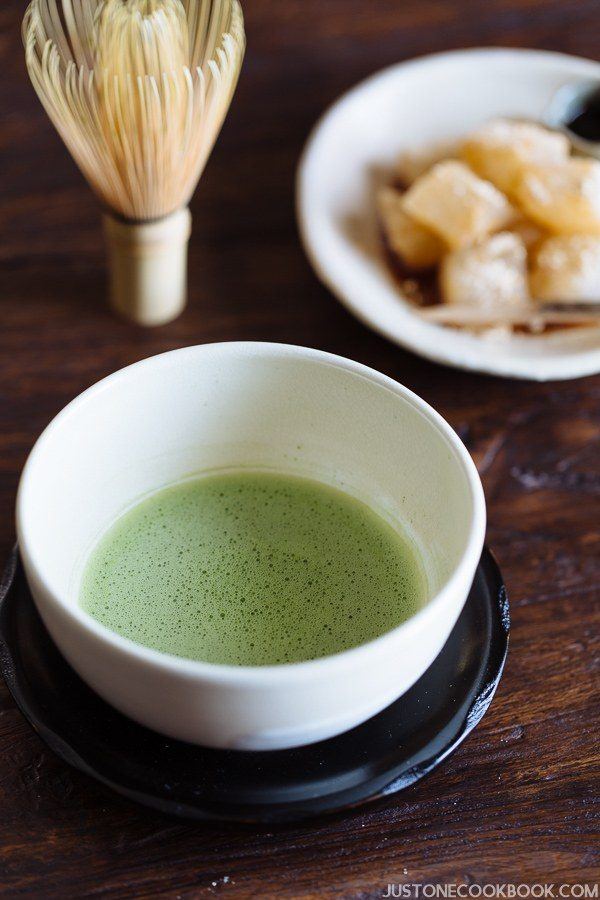
As I was writing this post, I realized that my love for matcha started around the young age of eight.
I remember my grandma took me to the Japanese tea ceremony – Ochakai (お茶会). I got to dress up and pretended to be a grown-up “lady”. Even though I was too young to comprehend the full meaning of the rituals, I was captivated by the gracefulness of the host and the elaborate presentation. The first taste of matcha hit me as strong and bitter initially, but as the richness lingered in my mouth I began to appreciate its unique earthiness, and I’ve loved matcha ever since.
Today I enjoy making matcha at home as a way to relax and for its many health benefits. To share with you this wonderful restorative Japanese tea, I’ve put together an informative guide and a video on how to make a perfect cup of matcha at home.
Watch How To Make Matcha (Japanese Green Tea) 抹茶の点て方
Relax and enjoy with authentic matcha at home. Green tea is full of antioxidants, and the unique earthy matcha flavor is irresistible.
Matcha 101
What is Matcha?
Matcha (pronounce: “MA-cha” 抹茶) is finely milled green tea powder.
What’s the difference between matcha and regular loose-leaf green tea?
The tea plantations that are designated for matcha are completely shaded for about 20 days before harvesting so that the tea grows without direct exposure to sunlight. This causes both the amino acid theanine and the alkaloid caffeine in the tea leaves to increase and yields a sweet flavor and distinct aroma.
How is matcha made?
- Shading: Early to mid-April, tea leaves designated for matcha are completely shaded.
- Harvesting: Around early May the tea leaves are carefully picked.
- Steaming: As soon as the leaves are picked, they go through steaming process to prevent them from being oxidized and retain natural green color, fragrance, and nutrition. The main difference between Japanese green tea and other teas (Chinese green tea, black tea etc) is that Japanese tea leaves are steamed.
- Cooling/Drying: The leaves are passed through the various stages of an air machine to cool and dry.
- Grinding: The tea leaves are ground into a fine powder. Traditionally, it’s manually ground on a stone mill, but these days it’s done with machines.
Why is matcha good for your health?
It is an antioxidant powerhouse. Antioxidants are the magical nutrients and enzymes responsible for giving us younger-looking skin, boosting memory and concentration, increasing energy level, burning fat, and preventing a number of life-threatening diseases like cancer.
Does Matcha contain caffeine?
Matcha powder has as much caffeine as coffee, but it is absorbed by the body at a slower rate. That means matcha has less of the caffeine side effects. If you are looking for a drink that can give you a longer lasting energy, matcha is a great option for those who want to quit coffee.
How long does green tea powder last? How should I store matcha?
The shelf-life of an unopened package depends on how it is packaged. In general, high quality (unopened) green tea powder lasts for 6 months. It’s best to use up within 2-3 weeks of opening the package. To store, seal the package tightly and store inside an airtight can. Avoid storing in direct sunlight and areas with high temperature or humidity. You can do this easily by drinking more matcha green tea or making delicious desserts!

3 Things You Need To Make Matcha
Since matcha is in the form of a finely ground powder, the way we make it is very different from the way to prepare loose-leaf green teas. In Japan, special tea utensils are typically used to prepare matcha. Below are the main tea utensils (and alternative suggestions) you will need to make matcha:
1) Chawan (Tea Bowl) 茶碗
Chawans are available in a wide range of sizes and styles, and different styles are used for thick and thin tea. Shallow bowls, which allow the tea to cool quickly are used in summer; deep bowls are used in winter to keep the tea hot for a longer time.
Where To Buy: You can buy the chawans on Amazon or check if the nearby Japanese ceramic store carry any. Alternatively, you can use a similar size bowl (diameter should be at least 4 3/4 inch or 12 cm).
Cleaning & Storage: Rinse the chawan well and store in open air to dry. After the surface has dried, allow additional time for the bowl to dry completely as ceramic tends to retain moisture internally.
2) Chasen (Tea Whisk) 茶筌
This bamboo whisk is called chasen and the one in the above image has 80 tines. It’s great for whisking matcha thoroughly to create nice rich foam.
Where To Buy: You can purchase on Amazon. If you have an electric frother, you can use it instead.
Cleaning & Storage: Rinse the chasen well without using detergent and dry and store upright (tines up) in the open air.
3) Chashaku 茶杓
A chashaku (‘teascoop’) is a traditional Japanese tea utensil for measuring out a serving of powdered matcha. My chashaku is carved from bamboo, but some are made from rare woods or ivory.
For one tea bowl, you will need 1 and 1/2 heaping scoops of green tea powder (= about 2 g) and 2 to 2.4 oz (60-70 ml) of hot water.
Where To Buy: You can purchase chashaku here. You can alternatively use a regular teaspoon. 1 teaspoon of powdered match is 2 grams, and that’s what you’ll need for making one tea bowl.
Cleaning & Storage: Gently wipe the chashaku with a soft dry cloth or tissue. Do not use water.
Optional Items
Extra Tea Bowl: If you’re using boiling water instead of measuring the exact temperature of hot water (185F/85C), prepare an extra tea bowl. You will need to pour the boiling water into the extra tea bowl first so it’ll cool down before whisking.
Cloth: Use cloth such as 100% cotton to dry your tea bowl.
Fine Sieve: A fine sieve helps to remove powdered lumps. If you don’t own one, make sure to spend extra time at step 8 (in the recipe) to blend well with green tea powder and hot water before pouring more hot water into the tea bowl.
2 Types of Matcha Green Tea
Depending on the preparation method, there are two types of matcha: the thinner Usucha (薄茶) and the thicker Koicha (濃茶).
Koicha is the green tea of choice in the Japanese tea ceremonies and special tea parties. It is much sweeter and more full bodied than Usucha.
For a beginner and everyday use, I recommend making usucha.
Enjoy Matcha At Home Without Going To Japanese Tea Ceremony
Japanese tea ceremony (or we call Sado (茶道), Chado (茶道) or Chanoyu (茶の湯) or Ocha (お茶) in Japanese) is a choreographic ritual of preparing and serving matcha. The whole process is not about drinking tea; it’s all about aesthetics and considerations the host of the ceremony have for the guests with every movement and gesture.
As a guest, there are a lot of etiquettes and rules to follow when you attend the ceremony. For example, when matcha is served by a host, you hold the tea bowl with your right hand on its side and left hand under the cup. Then you will need to rotate the bowl a little to the right before drinking.
Why do we “turn” the bowl? When the host places the tea bowl in front of you, you are looking at the most beautiful part of the bowl. It is rude if you put your mouth directly on it, therefore you turn the bowl to the side and drink.
You can always experience the Japanese tea ceremony at tea houses in, but I also wanted to show you how easily you can prepare delicious matcha at home and enjoy it without attending the Japanese tea ceremony.
A simple ritual of making matcha is always a welcome relaxation anytime of the day. For me, the act of whisking and partaking the emerald green cup of tea reminds me to take a slower pace of life and appreciate the beauty of simplicity. I hope it will bring you the same calming experience as well.
GIVEAWAY TIME!
I’m giving away the Ippodo’s Matcha Starter Kit to one (1) Just One Cookbook reader. Click here for your chance to enter. The contest is open to everyone worldwide.
I hope you enjoy my matcha recipe! If you make this recipe, snap a picture and hashtag it #JustOneCookbook. I love to see your creations on Instagram, Facebook, & Twitter! Thank you so much for reading and trying the recipes!
Don’t want to miss a recipe? Sign up for the FREE Just One Cookbook newsletter delivered to your inbox! And stay in touch with me on Facebook, Google+, Pinterest, and Instagram for all the latest updates.
- 1 tsp matcha (green tea powder) (1 tsp = 2 g = 1 ½ heaping ladles)
- 2 oz boiling water (2 oz = 70 ml)
- 2 tsp matcha (green tea powder) (2 tsp = 4 g = 3 heaping ladles)
- 1.4 oz boiling water (1.4 oz = 40 ml)
Prepare matcha and tea set.
- Pour boiling water into the bowl.
- Gently whisk the tip of the Chasen in the hot water. This warms up the bowl and soften the bamboo tines, making the chasen flexible and springy for effective whisking action.
- Discard the hot water from the bowl and dry the inside of the bowl with a clean dry cloth.
- Scoop 2 tsp. (1 ½ heaping teascoops) matcha into your fine mesh strainer. If you use a chashaku, the scoop should be rounded, and reaching just the point where the chashaku starts to bend.
- Sift your matcha into your dry empty bowl. This will ensure there are no clumps and your tea will be smooth.
- Pour boiling water into a teacup and let it cools down for a minute (to 185F / 85C).
- Gently add very small amount of hot water into the bowl with matcha.
- Take the whisk in one hand and hold the rim of the tea bowl with your other hand. Combine the matcha and hot water till it blends well.
- Gently pour hot water into the bowl until it’s 1/3 full (roughly 70 ml).
- For Usucha, whisk the matcha and hot water briskly in a quick, back-and-forth stroking “W”(or “M”) motion using your wrist (not arm). When the tea has small bubbles, start whisking the surface of the tea, and continue until matcha has a thick froth with many tine bubbles on the surface.
- At the end, draw one circle and pick up the whisk in the center of the matcha tea. This will create a slightly higher fluffy foam at the center.
- For Koicha, you’re not making a frothy consistency with a fast whisking action. Instead, a slow kneading action from left to right, up and down, and a gentle 360 degree rotating action to make a thick, smooth, and even consistency without froth.
- Serve matcha immediately with wagashi (Japanese sweets). Since matcha is a powdered leaf, it does not actually "dissolve" The fine particles become suspended in the hot water during whisking. Therefore please enjoy the matcha before particles settle to the bottom of the bowl.
- Rinse the chasen thoroughly in warm water after each use and stand it on its base so the tines are sticking up in the air. Rinse and dry your bowl.
This recipe is not to teach proper method for Japanese tea ceremony, but to make delicious matcha at home.
Matcha: Matcha is in the form of finely ground leaves. It will not actually dissolve.
Equipment you will need:
- Chasen (tea whisk)
- Chashaku (tea ladle)
- Chawan (tea bowl)
- Small fine mesh strainer
- Teacup
Recipe by Namiko Chen of Just One Cookbook. All images and content on this site are copyright protected. Please do not use my images without my permission. If you’d like to share this recipe on your site, please re-write the recipe and link to this post as the original source. Thank you.
Did You Make This Recipe?
If you make this recipe, snap a pic and hashtag it #justonecookbook — We love to see your creations on Instagram, Facebook, and Twitter!
You Might Also Like...

Never Miss a Post!
Subscribe to receive email updates with our latest recipes, travel tips, and subscriber-only information!
Weekly Round-Up
Leave A Comment
Your email address will not be published. Required fields are marked *
Comment
Name *
Email *
Website
Reviews
Questions
General
Recipe Rating
Notify me of followup comments via e-mail. You can also subscribe without commenting.
This site uses Akismet to reduce spam. Learn how your comment data is processed.
Discussion
Ohhh… Please enter me in this fabulous contest. I already subscribe to Just One Cookbook. Thank you.
- Nami wrote:
HI MIss Kaci! You can enter for your chance from the link provided in the blog post. This contest is open worldwide, so anyone can enter. 🙂
I remember reading about the tea ceremony and matcha a very long time ago as a child. It fascinated me. Thank you for returning it to my thoughts.
Hello Nami!
Thanks for the explanation on the different matcha powder! I’ve always wondered which one would be better to use to drink so I never bought any so far. Also I have the feeling matcha must be even bitter than green tea leaf and not everyone can love it… Is that true?
I remember eating a mille-crepe matcha with powder on top and I was really surprised by the bitterness though I kinda got use to it on a pastry.
Fun post! Educational, too — I learned a lot abut matcha that I didn’t know. Thanks!
Hi Nami,
I just recently discovered your blog and am loving your recipes! I traveled to Japan for the first time in September and fell in love with the culture and especially the food 🙂 Sadly, I couldn’t fit nearly as many Japanese grocery items as I would have liked to bring back in my suitcase so I’m stocking up my pantry from Uwajimaya and have already prepared many of your recipes. I am eating Japanese food every day now! I made your baked tonkatsu with homemade sauce last night and it was delicious!
I did manage to bring back two tins of high quality matcha, a chasen and a chashaku from Japan though! Your description of how to prepare matcha is very thorough and I’m finding it very helpful for my morning matcha every day.
Thanks for the great recipes, keep up the great work! ありがとうございます !
Emily
Thank you for the very informative post! You answered so many questions I had about matcha tea and tea ceremonies. Take care!
It is always a pleasure reading your blog. Very detailed and clear on every steps. I have tried many of your recipes and they all turned out well. Excellent effort!
I have been making anpan a few times and all my family members love it! I guess it goes well with matcha!
I am a big fan of matcha and that must have been so fun to go with your grandma to a tea ceremony when you were eight. The photos are beautiful and I loved learning all the steps involved!
I’m the one who really love matcha tea! Thank you for the recipe and very good information about the tea! 🙂
- Nami wrote:
Hi Bunny! For this particular post? I use this brand: http://shop.ippodo-tea.co.jp/kyoto/shopf/goods/index.html?ggcd=651604&cid=giftsets. Degree is not super high. It’s drinking matcha level, but toward the low end (yet matcha box costs $30, I think. The set cost $50).
Hi Nami,
Such a great post on matcha!
I would love if I could send you one of my Organic Ceremonial Grade Matcha for tasting. https://www.ecoheed.com
Kind regards,
Ryo – Eco Heed
Hello! I used to get my matcha from Season with Spice, but now that they have closed, where do you recommend I order good quality matcha powder for making tea?
- Nami wrote:
Hi Theresa! I recommend this one as I’ve tasted before and it’s good.
Matcha ceremony quality: http://amzn.to/2laeSvm
Regular drinking quality: http://amzn.to/2layyOX
Cooking quality: http://amzn.to/2laECqMHope this helps!
My question is this , Green tea causes me to have stomach problems . I know it is not the caffeine because I drink regular tea all the time . Does it do this to anyone else ? If so any tips I love green tea .
- Nami wrote:
Hi Georgette! Hmmm I’m not too sure why. Do you think you make the tea too strong? Or what type of green tea? When I take non-Japanese green tea, I feel it’s too strong. I don’t have stomach problem, but the tea is pretty strong. Japanese green tea is weaker to me. So I know green tea is different depends on what type. 🙂
Am I able to make matcha cold the same way, except placing it into the fridge after it’s been prepared?
- Nami wrote:
Hi Makayla! You could, but the powder will be accumulated at the bottom of the cup, so you have to mix it up again. In general, it should be enjoyed immediately as fragrance and taste will be changed.
hi i am from India
and have been gifted some matcha tea bags but dont know how to prepare the tea .
are we supposed to open the paper and use only the powder ?
instructions are written in japanese
- Nami wrote:
Hi Urvi! I would like to take a look if possible. Could you respond to this email with a picture? I am wondering if your tea is actually green tea, not matcha as it’s in the tae bag (paper bag). But I’d like to check to give proper instructions. Thank you!!

Welcome!
Never Miss a Post!
Love Our Recipes?
Looking For Something?


Never Miss a Post!
Subscribe to receive email updates with our latest recipes, travel tips, and subscriber-only information!
Weekly Round-Up