A towering reminder of Egypt's corrupt decades - The National
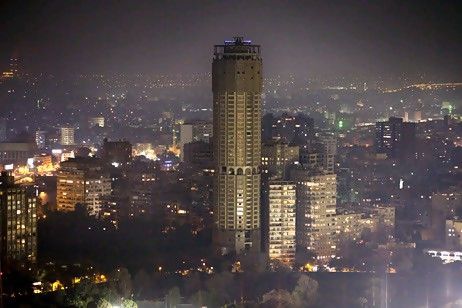
A towering reminder of Egypt's corrupt decades
118 |
CAIRO // Jutting above the skyline on the island of Zamalek in central Cairo is a timeworn glass-and-steel testament to one man's 45-year struggle against the stifling bureaucracy and endemic corruption of the Egyptian state.
Related

The 166-metre Gezira Tower and Hotel is one of the tallest buildings in Egypt and occupies some of its prime land. The cylindrical building was to become a 450-room Mövenpick hotel, but has stood empty for 16 years. A single display room furnished with bedding, lamps and an old television shows what might have been. The rest are bare concrete. A solitary security guard idles at the building's entrance.
The saga of the tower and its owner, Khaled Aly Fouda, exemplify the failure of three Egyptian presidents, as well as both socialist central planning and capitalist free-market reforms, to deliver prosperity to all but a few of Egypt's 83 million people.
It also represents what Egyptians hope might begin to change when they go to the polls this week to choose a president, capping a 16-month whirlwind that has included the toppling of Hosni Mubarak and the election of an Islamist-dominated parliament.
Whether the Tahrir Square "revolution" was a success - or even whether it was a revolution at all - now hinges in part on whether a new, democratically elected president and parliament can begin reforming a sclerotic, graft-ridden economic system that has left Egyptians such as the 81-year-old Mr Fouda shaking their heads in disappointment, disgust and cynicism.
"It's a very long story," said Mr Fouda in his Zamalek apartment as he began describing how a building that was conceived as a crown jewel of a president's vision for a new, modern Egypt is today an eyesore. "It will probably get longer."
Mr Fouda bought the land on which the Gezira Tower sits in 1968 during the presidency of Gamal Abdel Nasser. But it was under Anwar Sadat, who introduced reforms to overturn his predecessor's socialist ideas and open the economy to the world, that the idea for the tower took off.
Mr Fouda started out as an army statistician but moved into government in the late 1960s. He was among a set of bright, young advisers who gathered with Sadat in his village of Menoufiya on Fridays to discuss ideas for Egypt.
At one of those meetings, Mr Fouda pitched Sadat the idea for a tower that would bring Cairo into the skyscraper age.
"Sadat said to me, 'I want to build this country. I would love to see a new Manhattan in Egypt'," Mr Fouda recalled. "I said: 'Would you like Zamalek to be the new Manhattan of Egypt?' I presented my tower. He was very excited."
The seed for a tall tower was planted, but he did not begin investing in the idea until he left the government several years later.
The problems started during the regime of Hosni Mubarak, who took power in 1981 eight days after Sadat's assassination by Islamist militants. At first, the bureaucratic demands did not seem out of keeping with a project to build a tower in one of the world's most populous cities.
In the early 1980s, in one of just dozens of instances in which construction was halted by government ministries and agencies refusing to issue permits and licences, he was ordered to stop digging a 17-metre foundation after an inspector said the fire department did not have the equipment to reach the bottom floor. Then the ministry of interior's traffic department objected to Mr Fouda's parking plan and refused to allow the road to be blocked to bury the utility pipes under the pavement.
|
118 |