Danube River Cruise. Enjoying Central Europe On Board of A Ship
- Explore»
- Travel and Places (19,006)»
- Specialty Travel and Tours (470)

156 Followers
Danube River Cruise. Enjoying Central Europe On Board of A Ship
The Pleasures of River Cruising
Danube River Cruises have become increasingly popular since the opening of the Eastern European countries and the abandonment of the former iron curtain in 1989. Today, Danube river cruises allow for a hassle-free journey through the heart of Central Europe by comfortable and luxurious river boats. The Danube river is the second longest river (behind the Russian river Volga which has a length of about 3700 kilometers) of Europe with at total length of almost 2900 kilometers.
A Danube river cruise is a perfect way to explore the fascinating landscapes formed by the Danube river and the many culture-rich cities and towns along the Danube river. Cruising by river boat through these marvelous European landscapes is a unique experience virtually free of all the stressful hassles usually associated with long-distance travel. There is no re-packaging necessary while traveling to a new destination nor do you need to wait in queues at ticket stores desperately trying to handle the time schedules of odd national railways. Enjoying the constant changing scenery while sitting at the deck of a river boat make a Danube river cruise a truly unique experience.
The Danube River
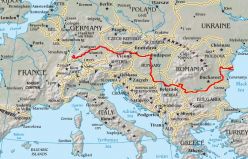
The Danube River And Its Many Attractions
The Danube river has its origins in the wooden mountain range of the Black Wood (Schwarzwald) in Germany and flows through many central European countries before it ends in a huge delta in the Black Sea. Large and famous cities are to be crossed while making a Danube river cruise. But there are also many small and picturesque towns often with medieval roots to be enjoyed during a Danube river cruise. Some of these towns boast an incredible historic heritage full of old churches, castles and other remarkable buildings. Apart from the built artifacts some of Europe's most beautiful landscapes are to be crossed on board of a Danube river cruise ship.
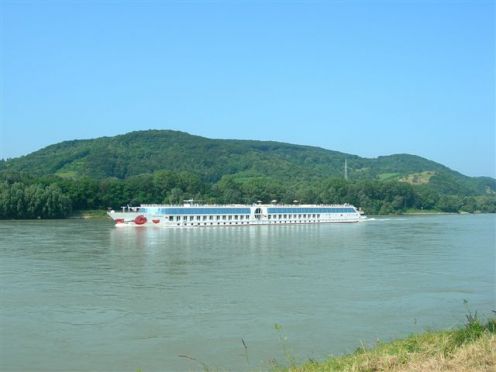
A Danube River Cruise Ship
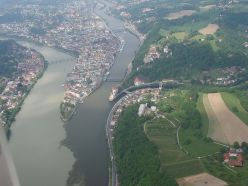
Passau (Germany)
 | A classic cultural history of the Danube by Italian author Claudio Magris. Amazon Price: $9.95 List Price: $17.00 |
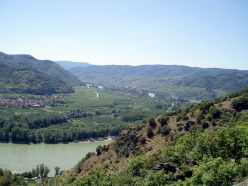
Wachau (Austria)
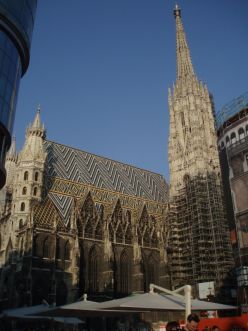
Vienna (Austria)
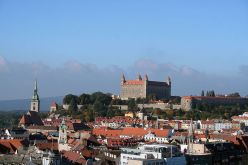
Bratislava (Slovakia)
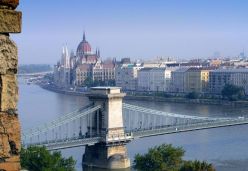
Budapest (Hungary)
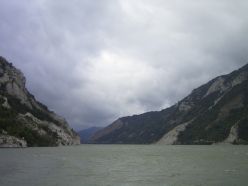
Iron Gate (Serbia/Romania)
Danube Delta (Romania/Ukraine)
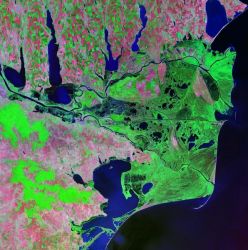
Danube River Cruise. Some Selected Highlights
Passau is an historical town Bavaria in Germany, located just at the border to Austria. It is otherwise known as the “city of the three rivers” since the Ilz (coming from the Bavarian wood) and the Inn (coming from the South) are joining the Danube here. The town (about 50.000 inhabitants) is full of historical buildings which all are renovated and give this town its special charm so typical for this region.
Linz is a city of about 190.000 inhabitants and used to be one of Austria's industrial centers. Today its modern steelworks and chemical plants are still relying on the Danube as waterway for the shipping of its raw materials. Despite its industrial origins Linz boasts a lovely inner city and a lively urban flair. It hosts the annual Bruckner festival to honor the famous musician Anton Bruckner, a citizen of Linz who worked as composer and organist. Linz is the “European capital city of culture” in 2009.
The famous abbey Melk, a benedictine abbey with medieval roots towers high above the Danube on a rocky outcrop marking the entrance to the Wachau Valley. The Wachau is a narrow valley with steep terraced slopes formed by the Danube. The Wachau is famous for its wine as well as for the many apricot trees whose flowers make for a lovely background during spring time. A great many of castles guard the Danube along the Wachau with the castle of Dürnstein probably the most famous one since King Richard (Lion Heart) of England was imprisoned here after his crusade to the Holy Land.
Vienna (1.8 million inhabitants) is perhaps the defining city of the whole Danube basin since it was the capital city of the Hapsburg empire which dominated the regions around the Danube for several hundred years and such was otherwise known as the “Donaumonarchie”. All the many attractions of Vienna (like the Schönbrunn palace, the inner city with St. Stephen's Cathedral, the Ringstrasse with its museums and so on) are within a short bus ride from the boat docking station at Nussdorf. The boat ride through Vienna is itself a unique experience.
Bratislava (450.000 inhabitants) is the capital city of Slovakia just some 60km to the East of Vienna. It boasts a lovely old city center and a dominant castle towering above the city and the Danube. Another dominant building is the Novy most bridge with its UFO shaped restaurant, a spectacular view especially from the cruising ship.
Budapest (1.9 million inhabitants) is the capital city of Hungary and, like Vienna, boasts a wide heritage of its prominent role in the Hapsburg empire. The Danube flows right through the city allowing some spectacular views especially to the Parliament building with its characteristic neo-Gothic style and to the hills of Buda with the castle overlooking the whole city. A unique experience for all on board is the crossing of the famous Széchenyi Chain Bridge, a historical bridge built in 1849.
Belgrade (1.6 million inhabitants) is the capital city of Serbia, one of the successor states of former Yugoslavia. The city is located right at the confluence of the Drava and the Danube. Belgrade has a long history going back to Roman times. For centuries Belgrade was at the crossroads between competing empires, the Austro-Hungarian Hapsburg empire and the Ottoman empire. The turbulent history in this often hard-fought region give this city its unique characteristic.
The Iron Gate is a narrow gorge formed by the Danube separating the Carpathian Mountains in the North and the Balkan Mountains in the South. The gorge stretches over some dozens of kilometers and narrows down to only about 230m in some sections. The dangerous rapids and cataracts of the gorge was feared for centuries by all skippers of the Danube. Due to the construction of a huge dam between 1964 and 1972 a safe passage is now guaranteed for all ships.
The Danube Delta at the border between Romania and Ukraine is the second largest river delta in Europe (after the Volga Delta) with a surface area of about 5200 square kilometers. The delta is a typical alluvial plain full of wetlands, channels, marshes and lakes. Being a unique ecosystem it hosts a great diversity of fauna and flora.
Danube River Cruises. Trips And Tour Packages
Owing to the increasing popularity of Danube river cruises it is possible to choose from a wide array of different trip and tour packages suited to virtually all needs and wants. The possibilities range from short one-day trips to certain specific locations and landscapes to complete river cruises over the whole length of the Danube.
One-day Excursions on the Danube: One-day excursions are offered virtually in all cities along the Danube and even in some of the smaller towns. Possibilities vary from short excursion within one of the large cities (for example Vienna or Budapest), within certain regions (for example a Wachau excursion Melk-Krems) up to excursions connecting two interesting places (for example Vienna-Wachau or Vienna-Bratislava). Cost are usually in the range between EUR 10,-- and EUR 30,--.
Short-distance Cruises on the Danube: Short-distance cruises on the Danube stretch usually over two days and are available for the most interesting parts of the Danube. A typical example is the connection Vienna-Budapest which stretches over five and a half hours (using a modern hydrofoil). Costs for a one-way ticket Vienna-Budapest are EUR 89,-- and for a two-way-ticket EUR 109,-- (prizes for summer 2009).
Long-distance Cruises on the Danube: The Danube is Europe's most favored river for sight-seeing boat cruising. Thus, there are many different packages available for long-distance cruises on the Danube suited to all tastes and needs. Long-distance river cruises usually stretch from four to fourteen days. The costs usually cover accommodation, full board (breakfast, lunch, dinner), participation on all on-board programs, harbor fees, return travel by plane including airport taxes and fees and shuttle bus to airport. Depending on the category of the accommodation on-board (cabin versus suit) the costs for a eight day full-package cruise between Vienna and the Black Sea range from about EUR 1100,-- per person to EUR 1700,-- per person. Participation on excursions are facultative and result in additional costs (about EUR 150 per person). Of course, these prizes may vary depending on the travel agency / ship agency and the chosen route. Shorter round-trips (for example Passau-Budapest-Passau, six days) are significantly cheaper with costs of about EUR 400,-- to EUR 600,--.
Further Information on Danube River Tour Packages
Danube River Cruise
This Hub was last updated on August 14, 2009
- previous
 River Cruises. The Pleasures Of Comfortable Traveling
 - next
 Rhine River Cruise. A Journey On The Most Important...
 Ancient Artifacts found by mudlark on the River Thames London
 How To Find Affordable and Cheap Family Cruises
 Take an All Inclusive Cruise
 Disney Wonder Cruise Ship
 Disney Cruise 2011
 Guide to Piraeus Cruise Port
Follow (2) Comments 5 comments

eugen_lisov 12 months ago
Hey! I love that ship! I keep seing it every summer in my hometown, Tulcea, in the Danube Delta. I’ve always though of taking one of these Danube cruises.
No HTML is allowed in comments, but URLs will be hyperlinked. Comments are not for promoting your Hubs or other sites.